Common Vestibular Conditions: How to Tell the Difference
Comparing the more common vestibular conditions
Melissa Chaudoin DPT, AIB-VRC
1/12/20262 min read
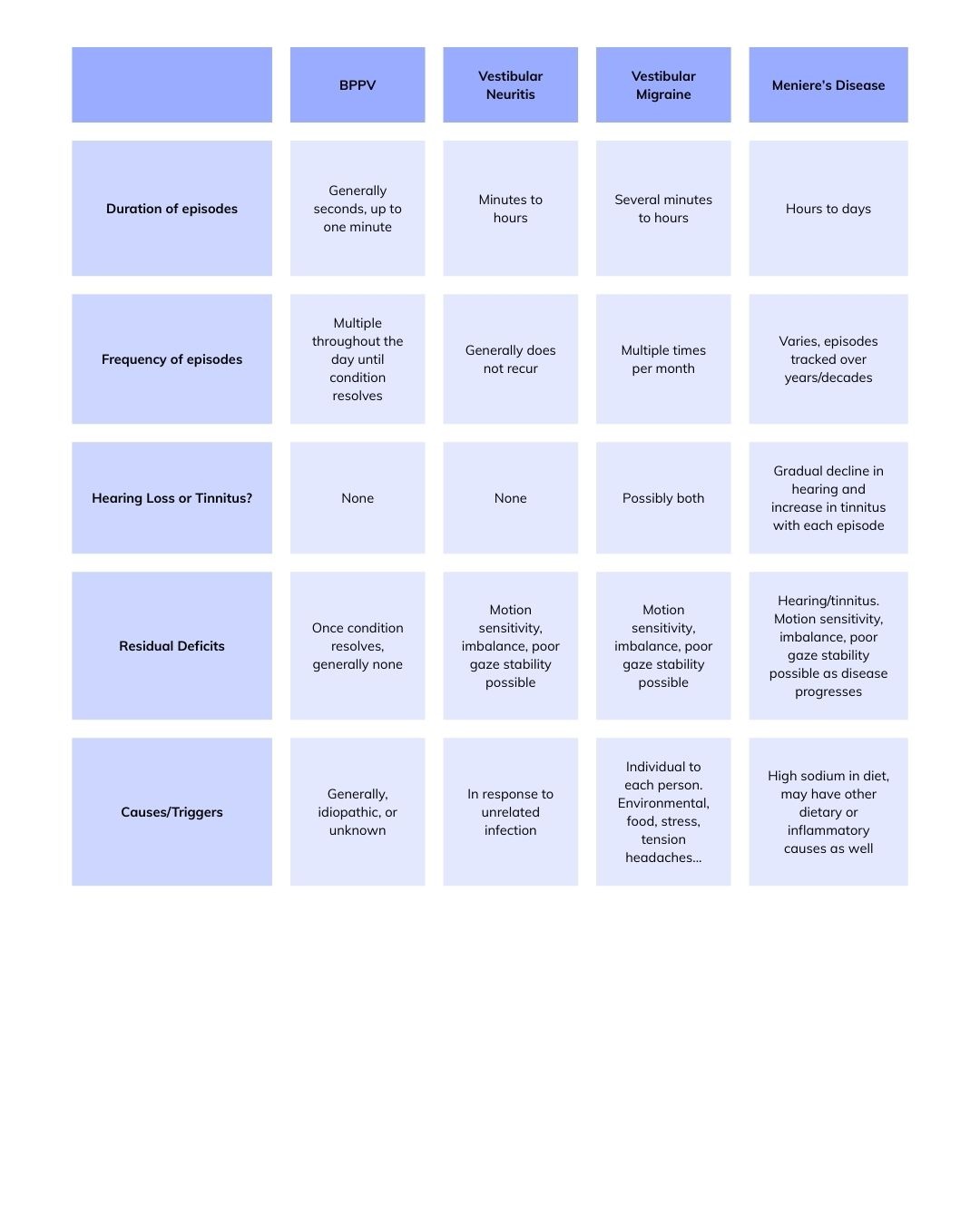
There are many vestibular conditions that create symptoms of dizziness or vertigo, imbalance, unsteadiness in your vision, or motion sensitivity. Some of the more common conditions are BPPV, Vestibular Neuritis or Acute Unilateral Vestibulopathy, Vestibular Migraine, and Meniere's Disease.
BPPV, or Benign Paroxysmal Positional Vertigo, is vertigo that lasts for seconds up to one minute when your head moves into certain positions. Most patients feel this when they go to lie down or roll over in bed. This is a relatively simple condition which resolves when maneuvers called canalith repositioning maneuvers are performed. See my previous blog post What is BPPV? for more details.
Vestibular Neuritis is inflammation of the vestibular nerve that is generally triggered by having another infection elsewhere, resulting in constant dizziness that lasts hours. The scientific community is constantly learning and expanding knowledge of vestibular function and disease. There is emerging evidence to show this inflammation can occur without an infectious source as well. Thus, in more academic circles, this condition is beginning to be referred to as Acute Unilateral Vestibulopathy. As this acute episode of vertigo subsides, your vestibular organ begins to regain some of its function and the brain learns to reorganize or adjust how it interprets information from each vestibular organ. Some patients gets full resolution of symptoms without any intervention needed. Others do not achieve full compensation and have lingering motion sensitivity, difficulty with gaze stability, or imbalance. Vestibular rehab identifies and addresses each deficit that is present with targeted exercises over a few weeks time.
Vestibular Migraine is a migraine that consists of symptoms of dizziness, motion sensitivity, positional vertigo, imbalance, and/or impaired gaze stability that lasts for hours. Headache MIGHT NOT occur. Vestibular migraine is similar to other types of migraine in that auras are common and symptoms can be triggered by various sources such as stress, diet, environment, or neck dysfunction. During the post-ictal period, or the period between migraines, some patients feel completely normal. Others note lingering issues with balance or dizziness. Vestibular migraines are primarily treated medically with medications and lifestyle management.
Meniere’s Disease - also sometimes referred to as Endolymphatic Hydrops. This is an excess of fluid in the vestibular organ causing increased pressure, resulting in severe dizziness for up to 72 hours as the pressure builds then resolves. Hearing loss and tinnitus are hallmark signs/symptoms of Meniere's disease due to the increased pressure affecting the entire inner ear apparatus. Patients generally do not notice issues with dizziness or balance between episodes, but the hearing impairment is permanent and progressive over time. In early stages, Meniere's is addressed by reducing sodium intake or various medications for symptoms or pressure. As the disease progresses, if symptoms are severe enough, more drastic measures can be considered that block nerve function on the affected side.
While these conditions can feel similar, they are not the same—and their treatments are not interchangeable. That’s why it’s important to understand which symptoms matter and how to describe them clearly to your provider. Knowing what your symptoms feel like, how long they last, and what may have triggered them helps your provider get you the right diagnosis and treatment sooner, often reducing unnecessary visits.
Questions or ready to get started? Contact me or schedule an appointment via the contact page or call 808-210-4458 today.
Contact
(808) 210-4458
© 2025. All rights reserved.
PHONE
FAX
(808) 482-8755
Providing expert vestibular physical therapy near me for residents and visitors of the Big Island, with telehealth options available for the entire state of Hawai'i since 2025